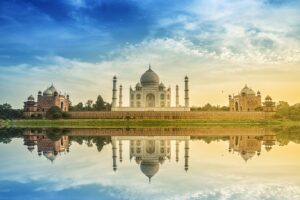
12 DAYS – 33 MEALS – Historic Monuments, exciting wildlife and extreme temples is what is included in this tour. Visit the historic monuments in Delhi, The Taj Mahal in Agra, Tigers in Bandhavgarh National Park and the ancient Khajuraho Temple among many of the highlights of this tour.
Hotel Accommodations
| City Name | Hotel Name | Room Type | Meal Plan | Nights (09) |
| New Delhi | The Suryaa or similar | Deluxe Room | MAP | 03 |
| Bandhavgarh | Bandhav Vilas or similar | Cottage | AP | 03 |
| Khajuraho | Chandela or similar | Deluxe Room | AP | 01 |
| Agra | Grand Mercure or similar | Superior City Room | MAP | 02 |
| Jaipur | Sarovar Premiere or similar | Deluxe Room | MAP | 02 |
| New Delhi | Holiday Inn Express or similar | Deluxe Room | Day-use | |
Key: MAP – Breakfast & Dinner; AP – Breakfast, Lunch & Dinner
Itinerary
Day 1 - Meet & greet on arrival
Our representative will meet you and provide assistance at your arrival.
Delhi is not one city. Within it lie several cities, each with its own distinctive allure. Historically speaking, what we see today is the composite of seven older cities that were built, looted, destroyed, and then rebuilt over a period encompassing several centuries. The thriving metropolis that you see today is testament to the spirit of Delhi a city that is unapologetically kitsch under its cultured veneer.
Check into your hotel and rest of the day is at your leisure.
Overnight in Delhi
Meals – Dinner
Day 2 - City tour of Delhi
After breakfast at the hotel, get ready for a panoramic tour of Old and New Delhi. You will get to see the Red Fort, Chandni Chowk, Jama Masjid, Raj Ghat and Gurudwara Bangla Sahib – all historic areas on Delhi. Experience a Cycle Rickshaw ride through the busy streets of Khari Baoli (local spice market).
Enjoy dinner at a local specialty restaurant.
Overnight in Delhi
Meals – Breakfast and Dinner
Day 3 - City tour of Delhi
After breakfast at the hotel, continue on to the city tour of Delhi. Today you will see India Gate which stands as a memorial to 84,000 soldiers of the British Indian Army who died in between 1914 and 1921 in the First World War, in France, Flanders, Mesopotamia, Persia, East Africa, Gallipoli and elsewhere in the Near and the Far East. Drive past the Rashtrapati Bhavan ‘Presidential Palace’ which is the official residence of the President of India at the western end of Rajpath in New Delhi, India.
Visit Humayun’s Tomb, built in the 1560’s, with the patronage of Humayun’s son, the great Emperor Akbar. Persian and Indian craftsmen worked together to build the garden-tomb, far grander than any tomb built before in the Islamic world.
Final stop of the day is at the Qutub Minar. This is a world famed structure which stands tall within the capital of the country, Delhi. The minar is about 240 meters tall and has got five storeys with a staircase which spirals all the way to the top.
Return to the hotel and rest of the day at leisure.
Overnight in Delhi
Meals – Breakfast and Dinner
Day 4 - Bandhavgarh
After breakfast at the hotel, we head to the airport and fly to Jabalpur and then drive to Bandhavgarh National Park, one of India’s major Tiger Reserves. It is also famous for producing the first white tiger in the wild. This National Park also boasts of a variety of avian species, mammals and reptiles.
Overnight at Bandhav Vilas
Meals – Breakfast and Dinner
Day 5 - Jeep Safari with a Naturalist
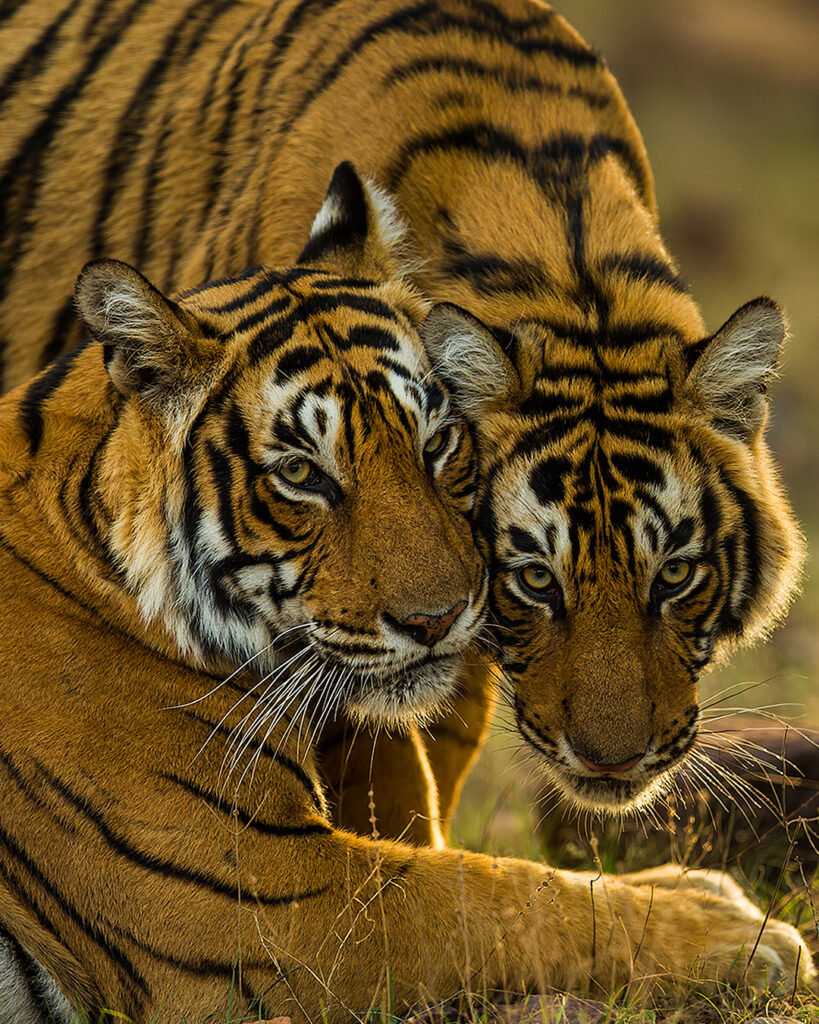 Enjoy an early morning and afternoon safari in a specially designed Jeep in Bandhavgarh National Park to try to spot the majestic Bengal tiger. You can also hope to see leopards, sloth bear, a variety of deer like the Sāmbhar, Chital, barking deer, four-horned antelope, jackals, wild boars, and so much more. Bird watchers can hope to sight species like green pigeon, Jerdon’s leaf bird, crested serpent eagle, and vultures among others. The park is also home to over 100 species of rare and exotic butterflies.
Overnight at Bandhav Vilas
Meals – Breakfast, Lunch and Dinner
Day 6 - Jeep Safari with a Naturalist
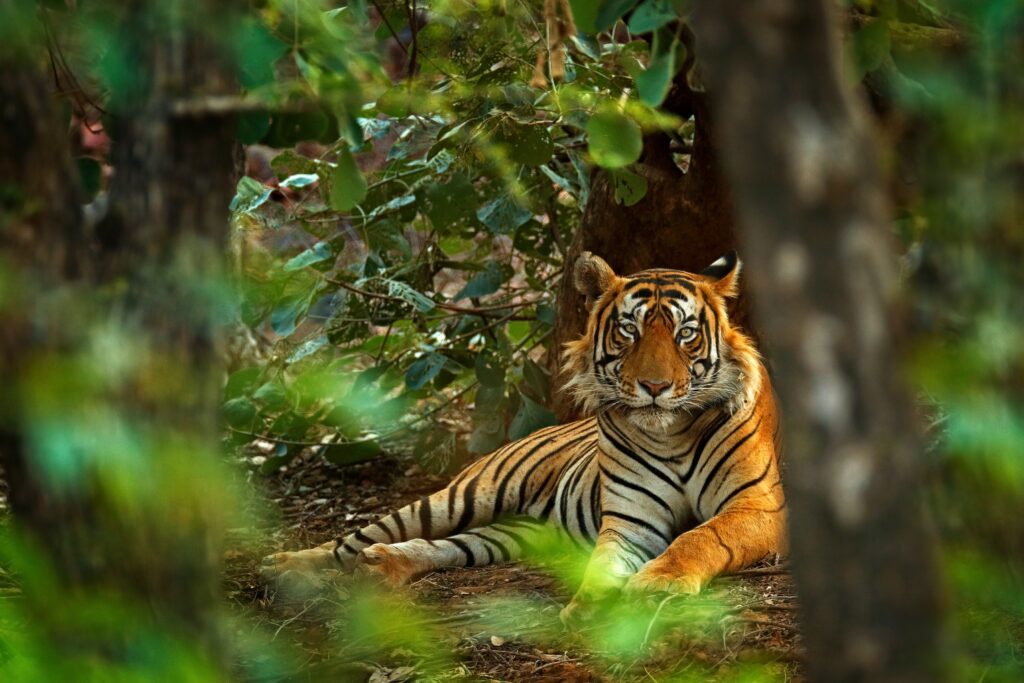 We continue with morning and afternoon Jeep safari in the Bandhavgarh National Park hoping to see more wildlife.
Overnight at Bandhav Vilas
Meals – Breakfast, Lunch and Dinner
Day 7 - Bandhavgarh - Khajuraho
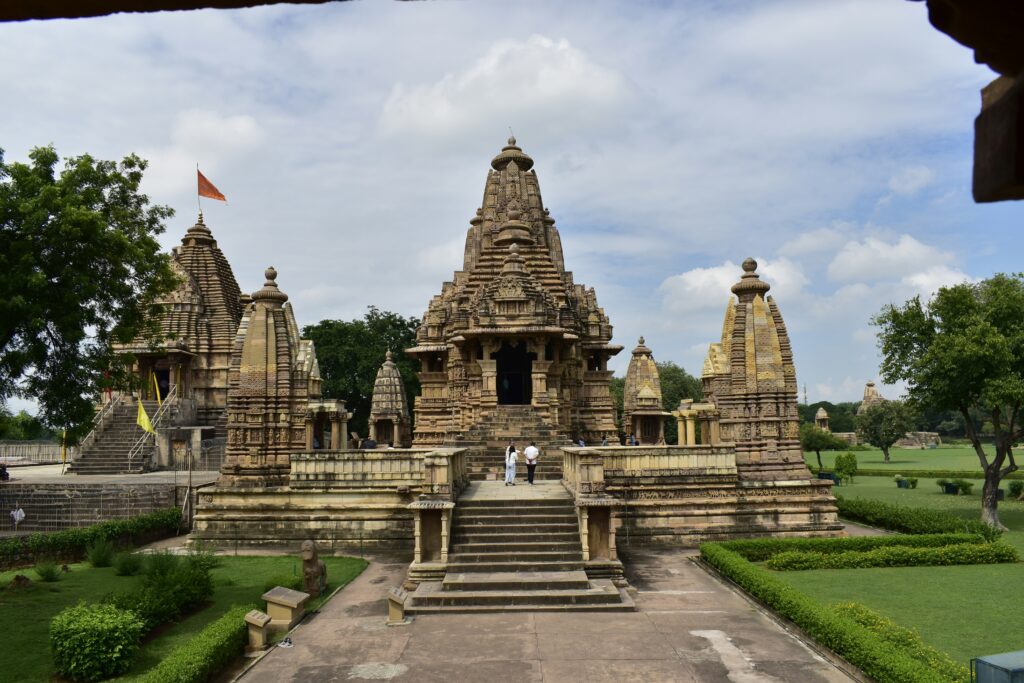 After breakfast at Bandhav Vilas, we depart by road to Khajuraho.
Khajuraho, once the citadel of the Chandela dynasty, is best known for its collection of breathtaking temples built between 950-1050 CE. Declared a UNESCO World Heritage Site in 1986, the temples of Khajuraho are divided into three groups, Eastern, Western, and Southern. Though globally famous for their erotic sculptures, the temples of Khajuraho offer much more than sensuality and erotica.
Overnight in Khajuraho
Meals- Breakfast, Lunch and Dinner
Day 8 - Khajuraho - Agra
After breakfast, explore the ancient temples of Khajuraho.
The Khajuraho Group of Monuments are a group of Hindu and Jain temples in Chhatarpur district, Madhya Pradesh, India, about 175 kilometres southeast of Jhansi. They are a UNESCO World Heritage Site. The temples are famous for their nagara-style architectural symbolism and a few erotic sculptures.
This afternoon, we travel to Agra by train.
Overnight in Agra
Meals – Breakfast and Dinner
Day 9 - Agra
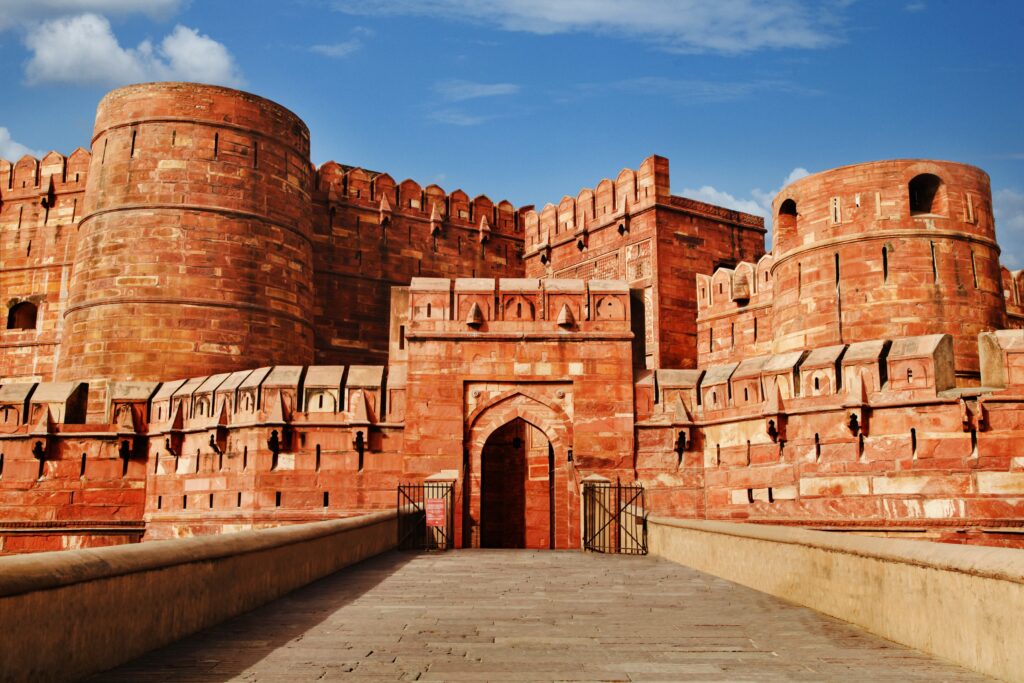 Today after breakfast, we have a full day of touring. We get to visit the Taj Mahal, Agra Fort and Itmad-ud-Daula’s Tomb.
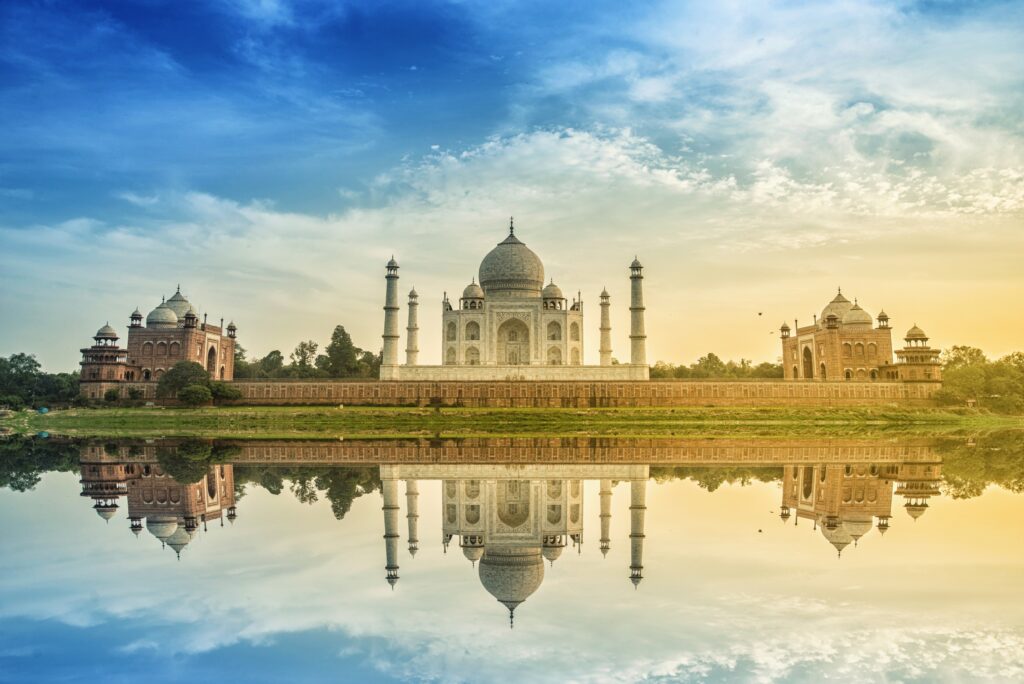
The Taj Mahal is a symphony crafted in pristine white marble, which has captivated the imagination of poets, authors, painters, and common people alike for generations. A lovelorn Shah Jahan had this glorious mausoleum erected for his beloved wife after her untimely death. It took 22 years and over 20,000 men to build this memorial of love from marble quarried 200 miles away. You have ample time to explore this magnificent monument and admire its perfect symmetry from every angle. Do not forget to get a close-up of the marble inlay work; it is sure to leave you spellbound. There is a sense of deep tranquillity that envelops you at this site in-spite of the crowd milling about.
Agra Fort
Agra Fort was the capital and nerve center of the Mughal Empire until Shah Jahan shifted it to Delhi. The present structure is an amalgamation of prolific building activities by successive emperors starting from Akbar. Shah Jahan, with his love for pristine white marble added some of the most impressive structures inside the complex. The outer ramparts were Aurangzeb’s contribution. A walk through this massive fort complex amongst royal pavilions and halls of audience will help you understand the evolution of aesthetics and styles under successive generations of Mughals.
Itmad-ud-Daula’s Tomb
Commissioned by Empress Nur Jahan for her father Mirza Ghiyas Beg, Itmad-ud-Daula’s tomb is the first Mughal structure that was built purely out of marble. The tomb is also the first mausoleum to be built on the banks of the Yamuna that was previously dotted with picturesque pleasure gardens. You can see the first extensive use of inlay work or pietra dura on marble in its decoration along with intricately carved marble jalis (lattice windows). The tomb is also referred to as a jewel box owing to both its squat and compact structure and the extensive use of colored stones on marble giving it a bejeweled appearance.
Overnight in Agra
Meals – Breakfast and Dinner
Day 10 - Agra - Jaipur
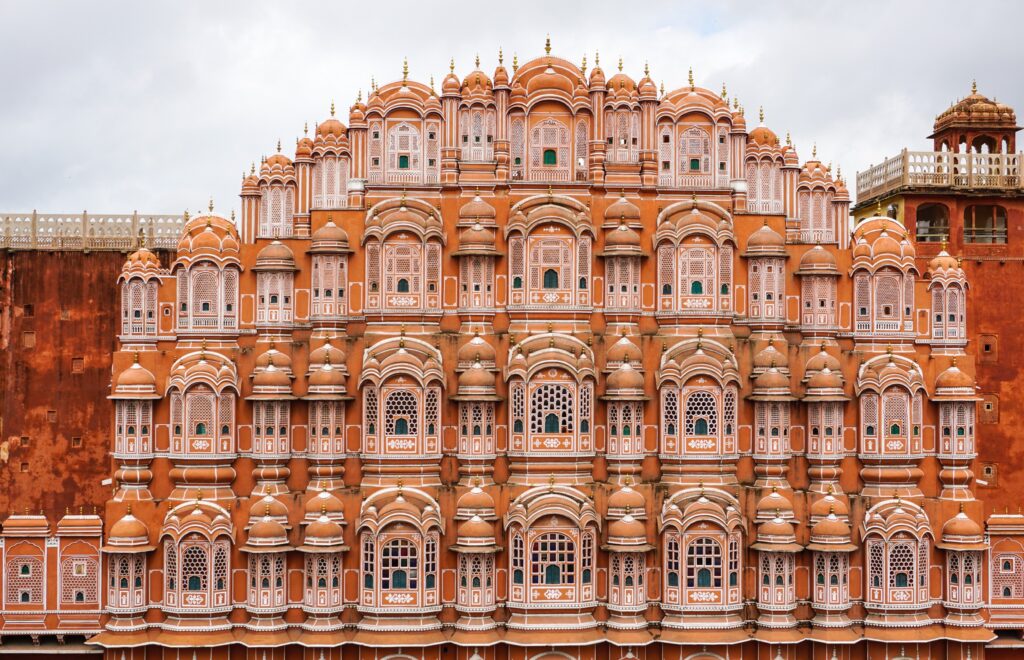 After breakfast, we drive from Agra to Jaipur.
The Pink City of Jaipur is one of the most popular tourist destinations in India. It is also amongst the most favored destinations for shopping of locals and tourists alike. The buildings in the old city were painted with an auspicious rose pink shade under the orders of Maharaja Ram Singh to welcome the Prince of Wales and Queen Victoria on their visit to India in 1876.
Overnight in Jaipur
Meals – Breakfast and Dinner
Day 11 - Jaipur
Today after breakfast, we tour the city of Jaipur with a visit to Amber Fort, Palace of Wind, City Palace Museum, Jantar Mantar and a walking tour through the bazaars of Jaipur.
Jeep Ride at Amber Fort
Take an adventurous jeep ride up to the main entrance of the Amber Fort instead of walking up the steep incline. The drive to the fort through Amber village is beautiful and reflects the Rajasthani culture. Reach the top of the Amber Fort, stroll through the sprawling complex of courtyards and halls.
Amber Fort
Amber Fort, which was constructed by Maharaja Man Singh in the 17th century, is one of the most popular landmarks of Jaipur. The fortress perched on top of a hill was the seat of power of the Kachhawa Rajput clan before the City Palace was constructed in Jaipur in the 18th century. The fort was made impregnable with battlements surrounding it. It overlooks the Maota Lake and it is sprawled over the Aravalli hills. The complex has some of the most stunning palaces, gardens, and courtyards decorated with colorful frescos and mirrors. Latticed windows or Jharokhas line the corridors that offered the royal ladies a chance to observe the activities without being seen. Explore the expansive fortress and its myriad pavilions, friezes, and hidden corridors as you hear stories of kings, their many wives, and secret corridors that allowed the king to move freely within the harem.
Palace of Wind – Drive Past
The honeycombed pink structure of the Hawa Mahal (Palace of Winds) is one of the most lasting images of Jaipur with its façade of latticed windows and intricate carvings. The architectural design of this unique building allows cool winds to blow through it during the hot summer months. It also served the purpose of a Jharokha from where the ladies of the house viewed the streets without being seen. There is a small but interesting museum within the building housing miniature paintings, ceremonial armour, and other royal regalia. If you wish, you can go inside and see the view from the other side. Note: There is an entrance fee for both Indians and foreigners to enter the Hawa Mahal. For Photo stop no charges applicable
City Palace Museum
The City Palace and its structures have been designed, combining the architectural elements of the Mughal, Europe, Rajput, and the Shilpa Shastra of India. A major part of the palace now consists of the Maharaja Sawai Man Singh II Museum. The palace is a unique and arresting complex of several palaces, pavilions, museums, workshops, and temples. Within the museums of the City Palace, you can see a treasure of royal portraits, paintings, furniture, costumes, armours, ceremonial attires, and much more. One of the most striking attractions of the palace is the four vibrantly painted doorways representing four seasons.
Jantar Mantar
The Jantar Mantar (Royal Astronomical Observatory) is a short walk away from the City Palace. This is the most famous of the five observatories built by Sawai Jai Singh across India. He was a great admirer and patron of progresses and research made in the fields of science and technology. His passion for astronomy led him to commission the creation of Royal Observatories in different locations in the country to help astronomers study constellations. For its uniqueness, it has found its way to the list of UNESCO World Heritage Sites.
Walking Tour – Evening Bazaar, Cuisine & Crafts of Old Jaipur
This immersive experience offers a unique opportunity to explore the city’s vibrant bazaars, renowned for their exquisite textiles, distinctive artisanal goods, and delectable street food. A specially curated selection of Jaipur’s vibrant textile market and street delicacies, each reflecting the region’s rich culinary and cultural heritage, awaits your discovery. The textile market, in particular, stands as a testament to Jaipur’s centuries-old tradition of craftsmanship, where intricate patterns, vivid colors, and fine fabrics come together to embody the artistic soul of the Pink City.
Exclusive Dinner with a local family
This evening, enjoy an authentic cultural immersion in Jaipur as you are welcomed into the home of a noble local family. From the warm traditional greeting upon arrival to engaging conversations and a home-cooked dinner, this intimate experience offers a unique insight into the region’s customs, traditions, and way of life. More than just a meal, it is a meaningful opportunity to connect with local people, share stories, and experience the genuine warmth and hospitality that define Rajasthan’s rich cultural heritage.
Overnight in Jaipur
Meals – Breakfast and Dinner
Day 12 - Jaipur - Delhi
After breakfast, we start our return journey to Delhi.
We will stop for lunch at a local restaurant and then proceed towards New Delhi.
There will be a Day-use room available for you to rest and change before your flight home.